


Exhibitor Prospectus
What is an exhibitor prospectus and what goes in it?
An exhibitor prospectus is the organizer's sales document for a trade show or expo. It tells a company why it should exhibit, who will be in the room, what booth options exist and what they cost, and how to sign up. It is sometimes called an exhibitor kit, though that term can also mean the packet of instructions sent after sign-up, which is the exhibitor manual. The prospectus sells; the manual instructs.
A prospectus is read by a marketing manager deciding where to spend a budget, so it has to answer their questions quickly: who attends, what it costs, what they get, and by when they must decide. This guide covers what to include, gives a section-by-section template you can copy, and a booth packages table to fill with your own prices. Eventdex does not write the document for you; it helps with the selling and the booking, as described below.
Updated by the Eventdex team



4.7/5 from 39 reviews on each
What a prospectus is for, and who reads it
The prospectus has one job: to get a qualified company to say yes before the floor plan fills. It is read by someone who must justify the spend to their manager, so write for that person. They want to know whether your attendees are their buyers, how they will be seen, and what they get for the fee.
Keep the prospectus separate from the exhibitor manual. The prospectus goes out before sign-up and persuades. The manual goes out after sign-up and instructs: deadlines, move-in and out, rules and order forms. Mixing them makes the sales document long and the instructions hard to find. For the manual, see the exhibitor manual guide.
Think of the prospectus as the answer to the three questions every exhibitor asks, in this order: will the right people be there, what will I get, and what will it cost. If a page does not help answer one of those, move it to the manual or cut it. A shorter document that is read to the end sells more booths than a long one that is skimmed.
Prospectus: before sign-up
Sells the show: audience, benefits, booth options, prices and how to book.
Manual: after sign-up
Instructs the exhibitor: deadlines, rules, logistics and service order forms.
Exhibitor manual guide
What to include
Start with the facts a decision-maker looks for. A prospectus that opens with the organizer's history and puts the price on page nine loses readers. Lead with the audience and the reasons to exhibit, then move quickly to options and cost.
Use your own verified figures, such as past attendance and the profile of attendees, only if you can stand behind them. If you do not have them, describe the audience in words and say who the show is for. Do not use numbers you cannot source.
Write the benefits from the exhibitor's side. Instead of saying the hall has a lively atmosphere, say what the exhibitor can do: meet buyers during dedicated exhibit hours, appear in the event app and on the website, scan visitors' badges for leads, and take part in the sessions that bring traffic to the floor. Each benefit should be something you will actually deliver and can describe in a sentence.
Who attends
Roles, industries and buying power of the attendees, stated only with figures you can back.
Why exhibit
What an exhibitor gets: time with buyers, a hall layout designed for traffic, and a program that brings people to the floor.
Booth options and prices
Sizes, locations, what is included and the price of each, in a table.
Dates and how to book
Show dates, hall hours, the booking deadline, the payment schedule and who to contact.
Booth packages table
Show booth options in one table so a reader can compare at a glance. Set your own sizes, prices and inclusions; the blank table below is a structure, not a recommendation. Keep what is included precise: if power or a table is extra, say so, since exhibitors will compare it with the manual later.
Price consistently. Make the step from one package to the next clear so an exhibitor can see what the extra money buys, and state the payment schedule and the cancellation terms next to the prices rather than burying them. If you offer early-booking terms, give the date they end. Exhibitors who can see the full cost on one page are more likely to book without a round of questions.
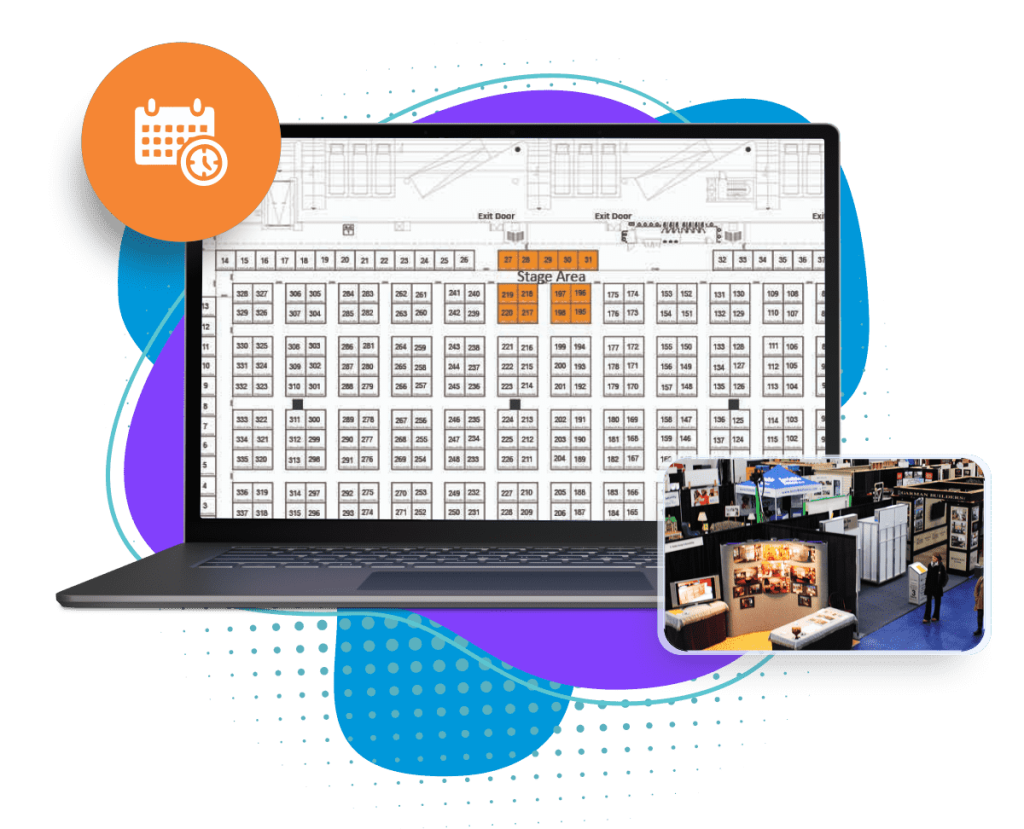
On Eventdex, booths can be sold on the floor plan. Exhibitors see which booths are available, choose one and book it online, and the organizer sees every change on the plan. Check the details of your own setup against the floor plan product page and the exhibitor management page, and name the booking option that fits your show.
| Package | Size | Price | Included | Add-ons |
|---|---|---|---|---|
| Standard booth | _____ | $_____ | _____ | _____ |
| Corner booth | _____ | $_____ | _____ | _____ |
| Large or island booth | _____ | $_____ | _____ | _____ |
| Start-up or small business | _____ | $_____ | _____ | _____ |
| Table-top | _____ | $_____ | _____ | _____ |
Sell booths from the floor plan
A floor plan makes a prospectus concrete. Exhibitors can see where each booth sits, which are available and which are taken, and early signs of a filling hall nudge the undecided. Put a picture of the plan in the prospectus and link to the live one.
Sponsorship belongs beside the booth options but in its own section. Some exhibitors want only space; others want visibility in sessions, on signage or in the event app. Describe each option and its price, and keep the details of those packages in a separate document if they are long. The event sponsorship packages guide covers how to structure them, and the sponsorship letter template helps when you approach companies directly.
Eventdex's floor plan software provides an interactive plan where exhibitors view and book booths online, with updates visible in real time, and the plan can carry your branding and color codes. Booths are sold as tickets in the same checkout as other registrations, per the exhibitor management page. Eventdex does not write the prospectus text or lay out the PDF; use a document or design tool for that.
Exhibitor prospectus template
Copy the template below into a document and replace each bracket. Keep the prospectus short enough to be read in one sitting, and put the price and the deadline where they are easy to find.
Exhibitor prospectus, section by section
EXHIBITOR PROSPECTUS

1. COVER
[Event name] [year]
[Dates] | [Venue and city]
Exhibit with us. Book your booth by [deadline].

2. WHY EXHIBIT
[Two or three sentences on what the show is and who it brings together.]
Reasons to exhibit:
- [Reason one, for example: meet buyers in one place]
- [Reason two]
- [Reason three]

3. WHO ATTENDS
Roles: [list]
Industries: [list]
Attendance and audience details: [only figures you can verify, with the source and year]

4. THE SHOW AT A GLANCE
Dates and hall hours: [details]
Exhibit hours: [details]
Move-in and move-out: [dates, details in the exhibitor manual]
Program: [conference sessions, receptions, other draws to the floor]

5. THE FLOOR PLAN
[Floor plan image]
Live plan and booking link: [URL]
Where the traffic is: [entrances, sessions, catering, in your own words]

6. BOOTH PACKAGES
[Table: package, size, price, what is included, add-ons]
What is included: [carpet, table, chairs, power, wifi, badges, listing]
What is extra: [list]

7. SPONSORSHIP AND VISIBILITY OPTIONS
[Option, what it includes, price]

8. EXHIBITOR BENEFITS
Listing in the event app and website: [yes / no]
Exhibitor badges: [number per booth]
Lead capture for your team: [how it works]
Marketing support: [what you offer]

9. HOW TO BOOK
Step 1: [choose a booth on the floor plan or contact us]
Step 2: [complete the exhibitor agreement]
Step 3: [pay the deposit]
Booking deadline: [date]
Payment schedule: [dates and amounts]
Cancellation terms: [summary, full terms in the agreement]

10. CONTACT
[Name, role, email, phone]

11. NEXT STEPS AFTER YOU BOOK
You will receive the exhibitor manual with deadlines, rules, move-in and move-out and service order forms by [date].
The Eventdex platform
Sell and run booths on one platform
- Event floor plan softwareInteractive plans where exhibitors view and book booths online.Learn more about Event floor plan software
- Exhibitor managementBooth sales, an exhibitor portal and booth staff.Learn more about Exhibitor management
- Event sponsorshipSponsor logos, branded badges, app ads and sponsored webinars.Learn more about Event sponsorship
- Lead capture appGive exhibitors badge scanning and lead capture.Learn more about Lead capture app
“Very smooth... Liked selecting meetings and blocking off time. Amazing! Would use again! ... I met with the people I wanted to meet and appreciated the option to read the profiles and decline meetings if someone would not be a good fit.”
 University at Buffalo
 Eversource Energy
 Georgia Tech
 Influence Communications
FAQ
Exhibitor Prospectus: common questions
What is an exhibitor prospectus?
The organizer's sales document for a trade show or expo. It describes the audience, the reasons to exhibit, the booth options and prices, and how to book, and it is sent to companies deciding whether to exhibit.
Is an exhibitor kit the same as a prospectus?
Not always. A prospectus is the sales document sent before sign-up. An exhibitor kit often means the packet sent after sign-up, which is better described as the exhibitor manual. Check which one a person means.
How long should a prospectus be?
Short enough to read in one sitting. Put the audience, the reasons to exhibit, the booth options and prices and the deadline early, and move detailed rules to the manual.
Can I include attendance numbers?
Only figures you can verify, such as past attendance you counted, with the year. If you do not have them, describe the audience in words and do not estimate.
Does Eventdex write or host the prospectus?
No. Eventdex does not author the prospectus. It provides the interactive floor plan where exhibitors view and book booths online, and exhibitor management for what follows, so the prospectus can link to a live booking page.
Sell your next show's booths on an interactive floor plan
Start with a free interactive floor plan, or talk to an event specialist on +1 (866) 434-5088.