
Event Planning Checklist
What goes on an event planning checklist?
An event planning checklist lists every task between deciding to hold an event and reporting on it afterwards, in the order they need doing. Most checklists are organized by time: what to settle six to twelve months out, what to open three to six months out, what to confirm in the last month, what happens on the day, and what to do in the week after.
The timeline below suits a conference, trade show or corporate event of a few hundred to a few thousand people. A smaller event compresses it; a large trade show starts earlier, because booths are sold months ahead. Each stage links to the part of the Eventdex platform that handles it, so the checklist can double as a plan for your event technology.
Updated by the Eventdex team


4.7/5 from 39 reviews on each
6 to 12 months before: goals, budget and venue
The decisions made first constrain everything after them, so make them deliberately and write them down.
Set the goal and how you will measure it
Revenue, leads for exhibitors, member renewals, pipeline, or attendee satisfaction. Pick the numbers you will report afterwards now, so you collect the data that proves them.
How to measure event ROIAgree the budget
Venue, catering, AV, technology, staff, travel, marketing and a contingency line. Set ticket, sponsorship and booth prices against it.
Choose the date and format
In person, virtual or hybrid. Check the date against holidays, industry events and your audience's busy season.
Hybrid event platformBook the venue
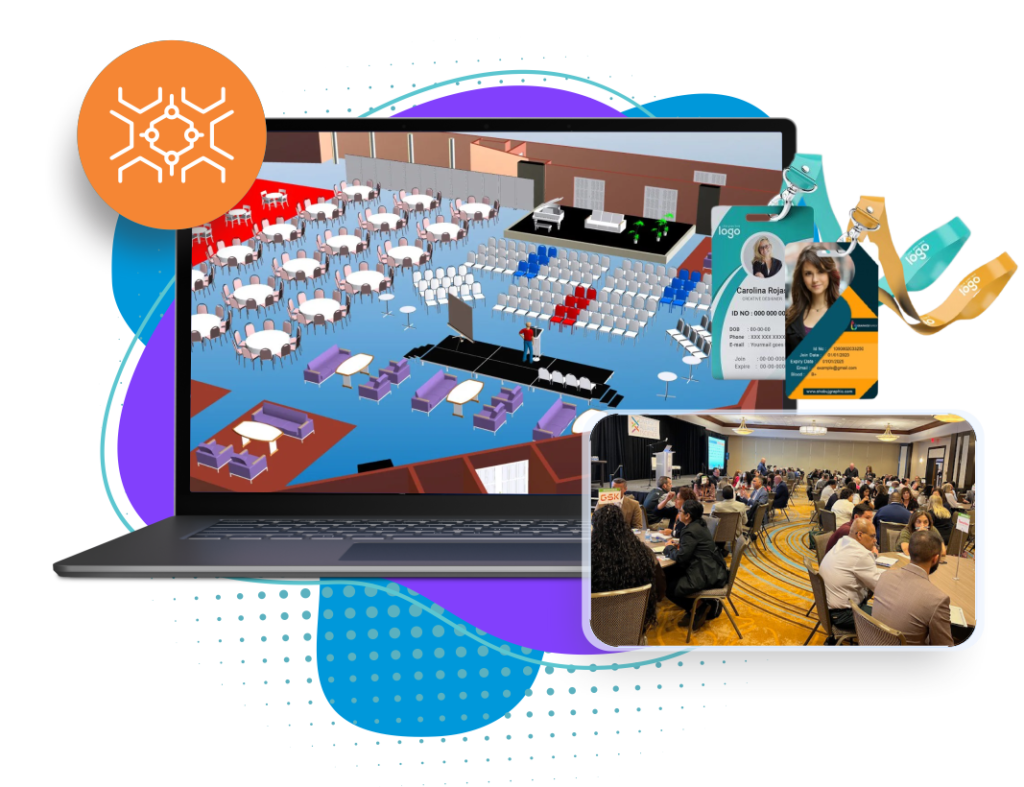
Capacity, breakout rooms, exhibit space, accessibility, Wi-Fi and load-in times. Get the floor plan as a file you can build on.
Event floor plan softwareChoose your event technology
Registration, the event app, check-in and badges, lead retrieval and matchmaking. One platform means one attendee record instead of exports between tools.
Event management software
3 to 6 months before: registration, speakers and sponsors
This is when the event becomes public. Registration opens, the program takes shape, and the people who pay for the event - sponsors and exhibitors - sign up.
Build the event website and registration
Ticket types, early-bird and group pricing, promo codes and the questions you need answered at registration.
Event registration softwareConfirm speakers and the agenda
Sessions, tracks and rooms. Publish a draft agenda early; it sells tickets.
Sell sponsorships
Packages with clear benefits: logo placement, sessions, app visibility, badge branding.
Event sponsorshipOpen booth sales
Let exhibitors choose and book their booth on an interactive floor plan rather than by email.
Trade show softwareStart promotion
Email campaigns to past attendees and prospects, partner promotion and social media, with each channel tracked to registrations.
1 to 3 months before: the attendee experience
With registration running, turn to what attendees will see and use, and to the logistics behind it.
Launch the event app
Agenda, speakers, exhibitors, maps and push notifications, branded for your event.
Event mobile appOpen meeting scheduling
For business events, let attendees, buyers and exhibitors book one-to-one meetings before they arrive.
Business matchmakingDesign badges and plan check-in
Badge layout, badge types by ticket, and whether badges are pre-printed or printed on demand at check-in.
Event badge designerPlan seating
For galas and dinners, assign tables and seats so guests can find them on arrival.
Event seating softwareBrief exhibitors
Move-in times, booth rules and how lead retrieval works, so exhibitors arrive ready to scan.
Lead retrieval app
The final two weeks: confirm and rehearse
Little should be new now. The job is confirming that everything booked is still happening, and testing what could fail on the day.
Send the know-before-you-go email
Venue, times, the app download, the QR code for check-in and what to bring.
Confirm suppliers and staff
Catering numbers, AV, security, volunteers and who is responsible for what on the day.
Test check-in and printers
Run real badges through the printers you will use, at the venue if possible, and plan for poor Wi-Fi.
Printers and devicesRehearse sessions
Speaker run-throughs, slides loaded, and for hybrid events a test of the stream.
On the day
Arrive early, keep the registration desk moving and watch the event as it happens rather than finding problems afterwards.
Check-in
QR check-in on phones, self-service kiosks and badges printed as attendees arrive, with walk-ins registered on the spot.
Onsite event managementSessions and engagement
Track session attendance, and take questions and polls from the audience.
Live event Q&AA live view
Arrivals, session numbers, meetings and leads as they happen, so the team can react while there is still time.
After the event: follow up and report
The week after the event decides whether it is remembered and whether people come back.
Share recordings and slides
For attendees who missed sessions, and as content for the next event's marketing.
Report to sponsors and exhibitors
Leads captured, meetings held and visibility delivered - the evidence they need to renew.
Report against your goals
Compare results with the numbers set at the start, and note what to change next time.
Event ROI
The Eventdex platform
Run the whole checklist from one platform
- Registration and ticketingEvent websites, ticket types, promo codes, payments and zero-commission ticketing.Learn more about Registration and ticketing
- Floor plans and booth salesInteractive floor plans exhibitors book their booths from.Learn more about Floor plans and booth sales
- Event mobile appA white-label app for iOS and Android with the agenda, networking and notifications.Learn more about Event mobile app
- Check-in and badgesQR check-in, self-service kiosks and on-demand badge printing.Learn more about Check-in and badges
- Matchmaking and meetingsAI meeting recommendations and one-to-one scheduling for business events.Learn more about Matchmaking and meetings
- Lead retrievalBadge scanning with lead scoring and CRM export for exhibitors.Learn more about Lead retrieval
“It's easy to use and interfaces very well with our needs. The scheduling function is awesome. It allows our companies and partners to schedule their meetings with no assistance thus reducing time and resources. In addition, if there are any snags in scheduling, the Eventdex staff takes care of your needs immediately.”
 University at Buffalo
 Eversource Energy
 Georgia Tech
 Influence Communications
FAQ
Event Planning Checklist: common questions
What should be on an event planning checklist?
Goals and how you will measure them, the budget, date, format and venue, event technology, registration and ticketing, speakers and agenda, sponsors and exhibitors, promotion, the event app, badges and check-in, supplier and staff confirmations, the event day itself, and the survey and reports afterwards.
How far in advance should you start planning an event?
Six to twelve months for a conference or trade show, so the venue, sponsors and exhibitors can be secured; three to six months for a smaller corporate event. Booth and sponsorship sales usually set the earliest deadline.
What is the first step in planning an event?
Decide what the event is for and how you will measure it - revenue, leads, attendance or satisfaction - then set the budget. Every later choice, from the venue to the technology, follows from those two.
What is on an event day checklist?
Staff briefed and in place, check-in and badge printers tested, walk-in registration ready, sessions and AV checked, the app and notifications live, and someone watching arrivals and session numbers so problems are fixed as they happen.
What should you do after an event?
Send a short survey within a day or two, share recordings and slides, give sponsors and exhibitors their leads and results, and report on the goals set at the start.
Can event software manage the checklist?
Most of it. Eventdex covers registration, ticketing, floor plans and booth sales, the event app, check-in and badge printing, matchmaking, lead retrieval and surveys from one platform, and responds to support requests within 6 hours.
Plan your next event on Eventdex
Start with a free interactive floor plan, or talk to an event specialist on +1 (866) 434-5088.