
Experiential Events: A Practical Guide
What is an experiential event?
An experiential event is built around what attendees do rather than what they watch. Instead of a row of chairs facing a stage, the program asks people to take part - to play, vote, ask, meet, try and explore - so they leave with something they did, not just something they heard.
The term comes from experiential marketing, where brands create hands-on experiences around a product. Today it is used just as much for conferences, trade shows, galas and corporate events that want attendees involved from registration to the last session. This guide covers why the approach works, the main types, ideas you can run, how to plan one and how to measure it.
Updated by the Eventdex team


4.7/5 from 39 reviews on each
Why experiential events work
People remember what they take part in. A question asked in a session, a meeting that turned into a deal or a leaderboard they climbed is more memorable than a slide, and it gives the attendee a reason to come back.
Participation also produces data. Every check-in, vote, question, booth visit and meeting is a signal of what attendees cared about - which a passive event never captures. That makes experiential events easier to justify to sponsors and to your own leadership.
Types of experiential events
Almost any event can be made experiential. The common forms are:
Brand activations and pop-ups
Short, hands-on experiences built around a product or brand, often in a public space or inside a larger event.
Product launches
Launches where guests try the product, ask questions live and share what they saw.
How to plan a product launch eventInteractive conferences
Programs built around Q&A, polls, workshops and roundtables rather than back-to-back keynotes.
Conference management softwareTrade shows with a reason to explore
Exhibit halls where attendees earn points for visiting booths and exhibitors get scanned leads in return.
Trade show softwareNetworking-first events
Events designed around scheduled meetings and speed networking rather than chance encounters.
AI business matchmakingGalas and community events
Dinners and fundraisers with live trivia, leaderboards and smooth check-in and seating.
Gala dinner software
Experiential event ideas
Each of these runs from the event platform rather than needing a separate build, and most work in person, online and in hybrid events:
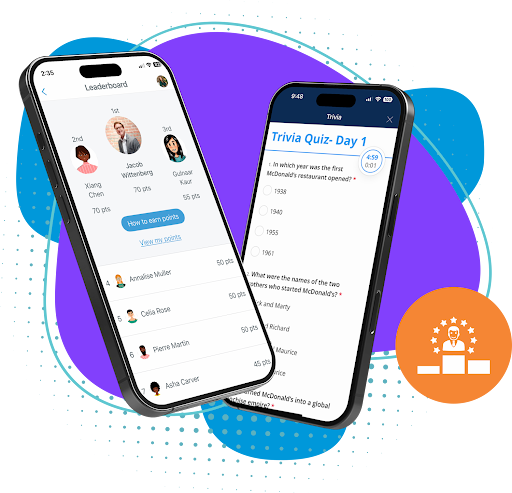
Live trivia with a leaderboard
Themed quiz rounds on attendees' phones, with a live leaderboard in session rooms, on the event homepage or in the app.
Trivia and leaderboardsPoints for exploring
Points and challenges for visiting exhibitor booths, attending sessions and answering questions, with prizes for the top of the board.
Event gamificationAudience-led sessions
Let attendees submit questions, upvote the best ones and ask anonymously, with a moderator in control.
Live event Q&A widgetSpeed networking rounds
Short, AI-matched one-to-one video meetings online, so each attendee can meet up to 10 relevant contacts in an hour.
Speed networkingMeetings that are matched, not left to chance
AI recommendations suggest who each attendee should meet, and the meetings are scheduled in the app.
Business matchmakingAn arrival that feels personal
Self-service kiosks where attendees scan in and collect a badge printed with their name as they arrive.
Self check-in kiosksA wall of who is there
An attendee wall that shows everyone attending in a grid or list, so people can find each other and connect.
Attendee wallFeedback while it is fresh
A short survey after each session or at the end of the day, so the next event is shaped by this one.
Event survey software
How to plan an experiential event
An experiential event needs the same planning as any other, plus a clear idea of what attendees will do at each step.
Decide what attendees should leave with
A contact, a demo, a new skill, a donation made - the experience is designed backwards from it.
Map the attendee journey
From registration to follow-up, list the moments where attendees can take part, and choose one or two to make memorable rather than ten that compete.
Pick the tools and rehearse them
Choose the engagement tools for each moment, set them up in the event app, and test them with staff on the venue's network before doors open.
Staff the experience
Someone has to host the trivia, moderate the Q&A and help at the kiosks. Brief them on what success looks like.
Measure and follow up
Collect the participation data during the event, then send surveys, recordings and leads while attendees still remember it.
How to measure an experiential event
Because attendees act, an experiential event can be measured by what they did, not just by how many came. Useful measures are:
Attendance and arrival
Check-ins against registrations, and session attendance tracked at each door.
Participation
Questions asked and upvoted, poll responses, trivia players and leaderboard activity.
Connections
Meetings requested and held, speed networking rounds completed and leads scanned by exhibitors.
Engagement tools
Make your event experiential with Eventdex
- Trivia and leaderboardsLive quiz rounds and real-time leaderboards, branded to your event.Learn more about Trivia and leaderboards
- Event gamificationPoints and challenges for booth visits, sessions and answers.Learn more about Event gamification
- Live Q&A and pollsSession questions with upvoting, anonymous posts and moderation.Learn more about Live Q&A and polls
- Speed networkingShort, AI-matched one-to-one meetings online.Learn more about Speed networking
- AI matchmakingRecommended meetings, scheduled in the event app.Learn more about AI matchmaking
- Event surveysSession and post-event surveys to measure what landed.Learn more about Event surveys
“Eventdex helped me run a smooth registration process during my event and helped me deliver an excellent mobile application to my event's attendees. Their support team was brilliant and I really enjoyed incorporating the Eventdex solutions into my events.”
 University at Buffalo
 Eversource Energy
 Georgia Tech
 Influence Communications
FAQ
Experiential Events: A Practical Guide: common questions
What is an experiential event?
An event built around what attendees do rather than what they watch - taking part through games, questions, polls, meetings and hands-on activities, so they remember the event and the organizer can measure engagement.
What is the difference between experiential events and experiential marketing?
Experiential marketing is a brand strategy built on hands-on experiences with a product. Experiential events apply the same idea to any event - a conference, trade show or gala designed so attendees take part rather than only listen.
What are examples of experiential events?
Brand activations and pop-ups, interactive product launches, conferences built around Q&A and workshops, trade shows where attendees earn points for visiting booths, networking events with scheduled meetings, and galas with live trivia.
How do you measure an experiential event?
By what attendees did: check-ins and session attendance, questions and poll responses, trivia and leaderboard participation, meetings and leads, and survey feedback after the event.
Can a virtual or hybrid event be experiential?
Yes. Gamification, live Q&A and polls, speed networking and matched video meetings all run online, so remote attendees can take part as fully as people in the room.
Make your next event one attendees take part in
Start with a free interactive floor plan, or talk to an event specialist on +1 (866) 434-5088.