

Event Marketing Guide
How do you market an event, start to finish?
Event marketing is using an event, whether your own or someone else's, to reach people, build relationships and produce a result you can count. It covers the promotion that fills the room, the experience inside it and the follow-up that turns attendance into business.
This guide is the overview for someone starting out. It walks the full sequence in order: goals, audience, channels before, during and after the event, a calendar and measurement. Where a step has its own detailed guide, it points you there instead of repeating it.
The examples and weeks are illustrative. Replace them with your own dates and goals.
Updated by the Eventdex team


4.7/5 from 39 reviews on each
What event marketing covers
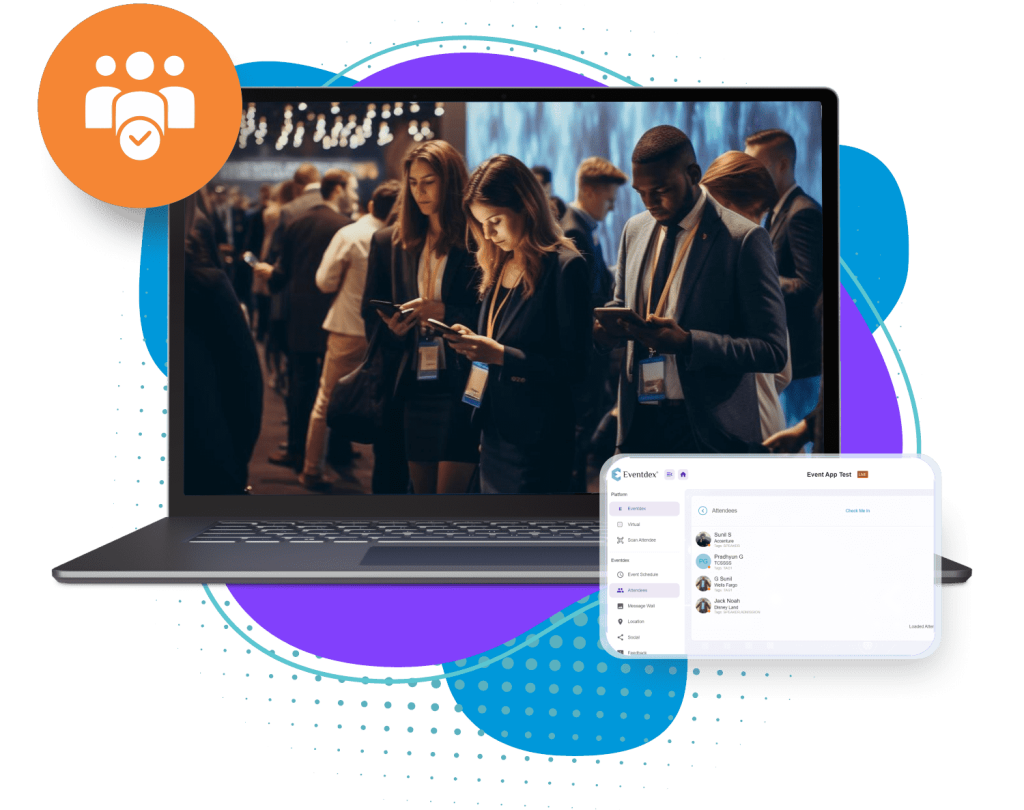
Event marketing has two sides. The first is marketing for an event you run: getting the right people to register and attend. The second is marketing through events: using trade shows, conferences and your own gatherings to meet buyers, partners and the press.
Both follow the same arc. You decide what the event must achieve, you work out who needs to be there, you reach them, you give them a reason to engage while they are there and you follow up while the memory is fresh.
Before the event
Positioning, an event page, registration, invitations and reminders. The aim is the right audience, not the largest one.
During the event
The experience, interaction, content capture and the way people are guided to what matters to them.
After the event
Thank-you and follow-up messages, content reuse, a survey and a report against your goals.
The event marketing process in seven steps
Work through these in order. Each step feeds the next.
Set one primary goal
Pick the single result the event exists to produce: registrations, qualified leads, pipeline conversations, renewals or brand awareness. You can have secondary goals, but one has to win when choices conflict.
Define the audience
Write down who must attend, what job they do, what problem brings them and where they already spend time. A narrow description is easier to market to than a broad one.
Write the reason to attend
State in one sentence what an attendee gets that they cannot get cheaply elsewhere: a speaker, a meeting, a demo, access or a result.
Choose channels and budget
Pick the few channels your audience actually uses, then split the budget by stage rather than spreading it thin. The channels table below helps.
Event budget guideBuild the calendar
Work backward from the event date and fix when each message goes out and who owns it.
Event marketing planRun the experience
Give people things to do and ways to meet, and capture the contacts and signals that serve your goal.
Measure and report
Compare results with the goal you set in step one, say what you would change and share it with those who funded the event.
Event marketing ROI
Match goals to measures before you start
A goal you cannot measure turns into a feeling. Choose the measure when you choose the goal, and check that you will be able to collect it.
| Goal | Main measure | Where the number comes from |
|---|---|---|
| Fill the event | Registrations from the target audience | Registration records, split by source |
| Generate leads | Qualified contacts captured | Booth scans and lead notes |
| Build relationships | Meetings held | Scheduled meetings and attendance |
| Raise awareness | Reach and engagement | Page visits, sign-ups and session attendance |
| Keep customers | Customers who attend and re-book | Registrations matched to your customer list |
Channels before, during and after
Use fewer channels well. The table lists the usual options by stage, with what each does best.
| Stage | Channel | Best used for |
|---|---|---|
| Before | Event website and registration page | Turning interest into sign-ups; the page every other channel points to |
| Before | Email invitations and reminders | Reaching known contacts and nudging registered ones |
| Before | Speakers, partners and sponsors | Reaching audiences you do not already have |
| Before | Social and paid promotion | Reaching new people; test small before scaling |
| During | Event app, signage and announcements | Guiding people to sessions, booths and meetings |
| During | Games, polls and Q&A | Giving people a reason to take part |
| During | Photos, short video and quotes | Raw material for after the event |
| After | Thank-you and follow-up email | Moving contacts toward a next step |
| After | Recordings, slides and summaries | Reaching people who could not attend |
| After | Survey and report | Learning what to repeat |
Before the event: promotion that fills the room
Start with one page that carries the whole case: what the event is, who it is for, the program, the speakers and a clear way to register. Every email, post and partner link should point to it.
Then send invitations in waves rather than one burst, and write a different reminder for each wave. The guides below cover each part in more detail.
Invitation emails
Copy-ready wording for the first invitation and its reminders.
Event invitation email template
During the event: give people something to do
The most useful marketing at the event is helping the right people meet each other and the right content. Plan a few moments where attendees act rather than watch, and decide in advance what you will capture from them.
Eventdex's pages describe tools for this: an event app with a schedule and push notifications, gamification with points and challenges for booth visits, sessions and answers, live Q&A, AI matchmaking and scanning at the booth. See the Eventdex section below for where each one is covered.
After the event: where most marketing is won or lost
Follow-up is the part most teams skip. Send a thank-you within a day or two, split the list by what people did, and give each group a clear next step. Share recordings or summaries with the people who could not come.
Then measure. Compare each result with the goal you set at the start, and write down three things to keep and three to change.
A sample marketing calendar
Work backward from the date of the event. The weeks below are illustrative for an event with a three-month run-up; compress or stretch them to suit yours.
| When | Task | Owner |
|---|---|---|
| 12 weeks out | Goal, audience and one-sentence reason to attend agreed | Marketing lead |
| 10 weeks out | Event page and registration live | Marketing and event team |
| 8 weeks out | First invitation to the core list; partners and speakers asked to share | Marketing lead |
| 6 weeks out | Second wave; program and speaker announcements | Marketing lead |
| 3 weeks out | Reminder to registered and unregistered contacts | Marketing lead |
| 1 week out | Practical details to registrants: schedule, venue, how to check in | Event team |
| Event days | Capture content and contacts; send live updates | Whole team |
| 1 to 2 days after | Thank-you message and survey | Marketing lead |
| 1 to 2 weeks after | Segmented follow-up, recordings and results report | Marketing and sales |
Mistakes to avoid
These are the ones that cost new teams the most.
No single goal
Trying to optimize for everything means measuring nothing well.
Promoting only at the start
One announcement does not fill an event. Plan reminders into the calendar.
Counting attendance as the result
Attendance is an input. Count what attendees did and what happened afterward.
Collecting contacts and not following up
A list that nobody messages within two weeks has little value.
Where Eventdex fits
Eventdex runs the event itself. It is not an advertising, social media or content planning tool, so plan and run your paid and social campaigns elsewhere and point them at your Eventdex registration page.
Registration
Branded registration with ticket types and automated emails, so each channel leads to one place.
Event registration softwareEngagement during the event
Points and challenges for booth visits, sessions and answers, with a leaderboard.
Event gamificationLead capture at the booth
Exhibitors scan QR codes on badges and business cards, score leads and export them to a CRM as a CSV file.
Lead retrieval appFeedback after the event
Session and post-event surveys, so your report rests on what attendees said.
Event survey software
The Eventdex platform
Tools for each stage of event marketing
- RegistrationBranded sign-up, ticket types and automated emails.Learn more about Registration
- Event gamificationPoints and challenges for booth visits, sessions and answers.Learn more about Event gamification
- Lead retrievalScan, score and export contacts from the booth.Learn more about Lead retrieval
- SurveysSession and post-event surveys to measure what landed.Learn more about Surveys
“Very smooth... Liked selecting meetings and blocking off time. Amazing! Would use again! ... I met with the people I wanted to meet and appreciated the option to read the profiles and decline meetings if someone would not be a good fit.”
 University at Buffalo
 Eversource Energy
 Georgia Tech
 Influence Communications
FAQ
Event Marketing Guide: common questions
What is event marketing?
Event marketing is using events to reach people, build relationships and produce a measurable result. It includes promoting an event you run and using events, such as trade shows and conferences, to meet buyers and partners.
How do you start event marketing?
Set one primary goal, define the audience, write the reason to attend, choose a few channels, build a calendar counted back from the event date, run the experience and measure against the goal.
When should event marketing start?
Before the event is announced. Fix the goal and audience first, then begin promotion several weeks ahead. The right lead time depends on the size of the event and how far your audience travels.
Which channels work best for events?
The ones your audience already uses. Email to known contacts and an event page that converts are the usual foundation, with partners, social and paid promotion added to reach new people. Test small before spending more.
How do you measure event marketing?
Choose a measure that matches your goal, such as registrations from the target audience, qualified leads or meetings held, and compare it with the target you set. See the event marketing ROI guide for the calculation.
Can Eventdex run my event marketing campaigns?
No. Eventdex's pages describe registration, the event app, engagement tools, lead capture and surveys. They do not describe advertising, social media scheduling or content planning, so run those in your own marketing tools and link them to your Eventdex registration page.
Run the event your marketing promised
Start with a free interactive floor plan, or talk to an event specialist on +1 (866) 434-5088.