


Event Strategy
What is an event strategy and how do you build one?
An event strategy is a short document that explains why your company runs events, which ones it runs, for whom, and how it will judge them. It sits above any single event. A plan tells you what to do for one conference. A strategy tells you which events deserve a plan at all.
This guide shows the parts of a strategy, a six-step way to write one, an example for a company with a small events team and the mistakes that make strategies fail.
Updated by the Eventdex team



4.7/5 from 39 reviews on each
Strategy, plan and tactics: the difference
People use these words loosely. Keeping them apart saves arguments later.
Event strategy
The choices behind a whole year or program of events: goals, audiences, formats and how success is measured.
Tactics
The single actions inside a plan, such as a reminder email or a speaker call.
Event marketing strategies
The six parts of an event strategy
A good strategy fits on one page. Each part answers one question.
| Part | Question it answers | Example answer |
|---|---|---|
| Business goal | What must events help the company achieve? | Build pipeline in one new market |
| Audience | Who do we need in the room? | Operations leaders at mid-size firms |
| Event mix | Which formats serve that goal? | One flagship conference, quarterly webinars, small dinners |
| Message | What should people leave believing? | We understand your problem and can solve it |
| Resources | What budget, people and tools do we have? | Two staff, a fixed budget, one platform |
| Measures | How will we know it worked? | Qualified leads, meetings booked, repeat attendance |
How to write an event strategy in six steps
Set aside a day with the people who own the goals. Do not start with venues or speakers. Start with the business.
Start from the company goal
Ask sales, marketing or the executive team what they need next year. Write it in one sentence. An event that cannot be tied to a goal is a candidate to drop.
Name the audience
List the two or three groups you must reach. Be specific about role, industry and what each group needs from an event.
Choose the event mix
Match formats to goals. Large events build reach. Small ones deepen relationships. Online events reach people who cannot travel.
What is a hybrid eventSet measures before you plan
Pick a few numbers you will track for every event, and agree on them in advance. Fewer is better.
Event KPIsFix the budget and the team
Decide what you can spend and who does the work. A strategy that ignores capacity becomes a wish list.
Event budgetBuild a calendar and review it
Place events on a year calendar, leaving gaps for follow-up. Review the strategy every quarter and change it when the data says so.
Event planning timeline
A corporate event strategy example
This is an illustration, not a benchmark. The numbers are left blank on purpose, because yours will differ.
One-page event strategy template
EVENT STRATEGY: [Company], [Year]

Business goal: [one sentence]

Audience: [group 1]; [group 2]

Event mix:
- Flagship event: [name, month, in person or hybrid]
- Mid-size events: [number and format]
- Online events: [number and topic]
- Small events: [dinners, roundtables]

Core message: [what attendees should believe afterwards]

Resources: budget [amount]; team [names]; tools [list]

Measures for every event:
- Registrations against target
- Attendance rate
- Qualified leads or meetings
- Attendee feedback
- Cost per outcome

Review dates: [quarterly dates]

Stop rules: we drop an event if [condition] for two editions.
Common strategy mistakes
Most weak strategies fail in the same few ways.
Goals no one owns
If sales and marketing disagree on what an event is for, the event serves neither. Get the goal signed off first.
Too many events
Ten thin events do less than four strong ones. Count the staff hours before you add another.
No follow-up plan
Events create interest that fades fast. Plan what happens in the week after.
Event follow-up emailMeasures chosen afterwards
Picking numbers after the event invites cherry-picking. Fix them in the strategy.
Event ROI
Where software fits in the strategy
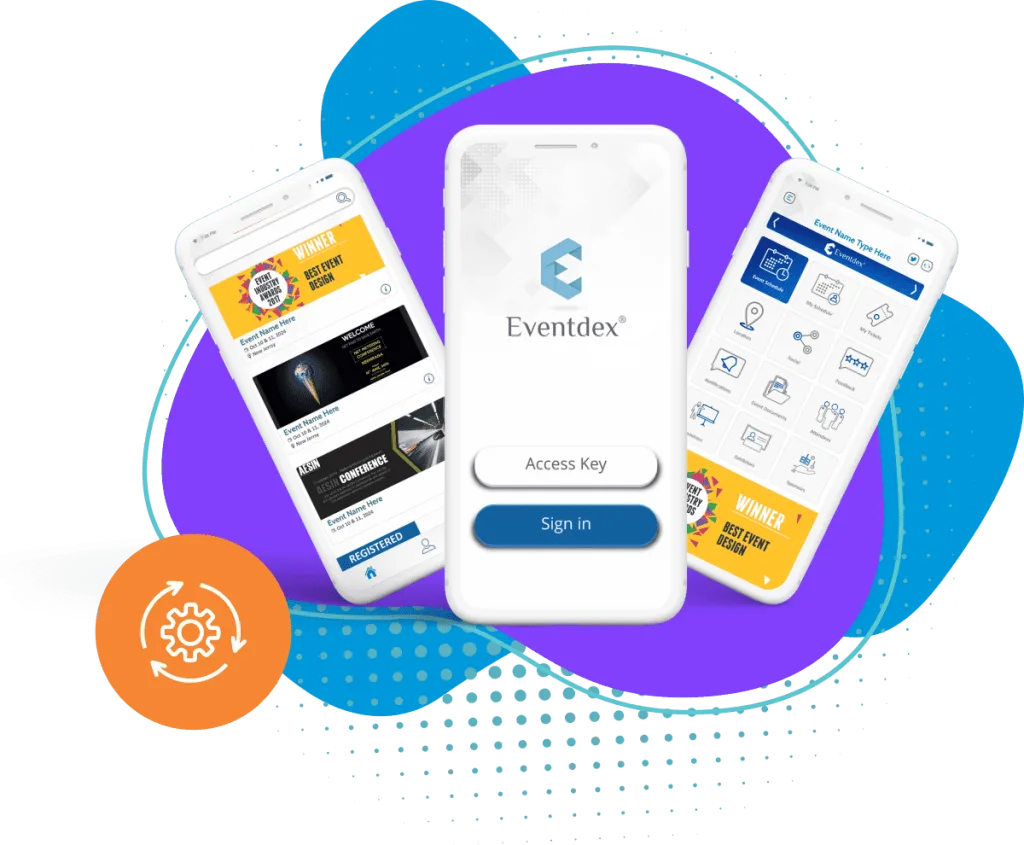
Strategy is a thinking job. Software helps you carry it out and see the results. Eventdex's pages describe an event management platform with registration and ticketing, an event mobile app, check-in and reporting for in-person, virtual and hybrid events. Using one system across events makes it easier to compare them.
Eventdex's pages do not describe a strategy-writing tool, so treat the template above as a document you keep in your own files.
Event management platform
One place for registration, the app and on-site tools.
Event management software
The Eventdex platform
The jobs event management software covers
- Event managementThe platform behind registration, the app and on-site tools.Learn more about Event management
- Registration and ticketingRegistration pages, ticket types and payments.Learn more about Registration and ticketing
- Event mobile appThe schedule and announcements in attendees' pockets.Learn more about Event mobile app
- Event technologyHow the tools around an event fit together.Learn more about Event technology
“It's easy to use and interfaces very well with our needs. The scheduling function is awesome. It allows our companies and partners to schedule their meetings with no assistance thus reducing time and resources. In addition, if there are any snags in scheduling, the Eventdex staff takes care of your needs immediately.”
 University at Buffalo
 Eversource Energy
 Georgia Tech
 Influence Communications
FAQ
Event Strategy: common questions
What is an event strategy?
An event strategy is a short document that sets out why a company runs events, which formats it uses, who they are for and how it will measure them. It guides every individual event plan.
What is the difference between an event strategy and an event plan?
A strategy covers a year or a whole program of events and says which events to run and why. A plan covers one event and says how to run it: budget, venue, schedule and owners.
How long should an event strategy be?
One page is enough to start. If it takes more, the choices are probably not yet clear. Add detail in the plans for each event.
How often should I review it?
Quarterly is a sensible rhythm for most teams. Review it also after every major event, while the results are fresh.
Does a small team need an event strategy?
Yes. A small team has the least room for wasted effort, so a clear list of goals and stop rules helps it say no to events that do not fit.
Run every event from one platform
Start with a free interactive floor plan, or talk to an event specialist on +1 (866) 434-5088.